
Scoliosis in children & teens: Early signs parents should know
During childhood or adolescence, especially during times of fast growth, scoliosis frequently develops subtly. Early on, it frequently produces little to no pain, so alterations may go undetected until curvature is more firmly established. Timely and appropriate care can be supported by knowing how referral channels operate, when screening may be beneficial and what scoliosis can look like in its early stages.
Assuming the worst is not necessary for early awareness. It merely enables families to make well-informed choices in the event that changes arise.
What is scoliosis and when does it usually appear?
Scoliosis is a condition characterised by an abnormal sideways curve of the spine. It most commonly appears during late childhood or early teenage years, often coinciding with growth spurts. Research suggests that adolescent idiopathic scoliosis, which is the most common form, has no single identifiable cause and may progress unpredictably during growth.
Importantly, scoliosis is not a posture problem and cannot be corrected by “standing up straight.” However, posture changes can sometimes be early visual cues that prompt further assessment.
Early warning indicators parents could observe at home
Visual changes are typically the first signs of scoliosis because it is frequently painless in its early stages. Subtle asymmetries that develop gradually rather than abruptly may be noticed by parents.
Uneven shoulders, one shoulder blade being more noticeable than the other, a small tilt across the waist or hips or garments hanging unevenly are common early observations.When bending forward, the rib cage may appear more prominent on one side of some kids.
Although these symptoms by themselves do not prove scoliosis, they may suggest that a scoliosis check in Brisbane is worthwhile, especially during times of rapid growth.
When screening for scoliosis can be beneficial
Screening does not diagnose scoliosis, but it can help identify whether further evaluation is appropriate. Screening is most useful during growth phases, when spinal changes can progress more quickly.
A scoliosis check typically involves visual observation and basic movement assessment and, when indicated, referral for imaging via a GP or specialist. Many clinical pathways emphasise early monitoring when asymmetry is detected, as progression risk is closely linked to growth and skeletal maturity. Evidence supports early monitoring rather than a “wait and see” approach when asymmetry is detected, as progression risk is closely linked to growth velocity.
Understanding referral pathways
When scoliosis is suspected, it's critical to have clear referral procedures. Through medical professionals, imaging tests like X-rays are ordered to validate the curvature magnitude and inform therapeutic choices.Depending on the severity and clinical findings, a general practitioner, paediatrician, physiotherapist or orthopaedic expert may be involved in the referral process.
Observation and routine monitoring could be advised for minor curvature. More pronounced curvature may require bracing or expert assistance. Even with proper monitoring, many children with scoliosis remain active and asymptomatic.
Where a kids chiropractor may fit in
Chiropractic adjustments cannot treat scoliosis or take the place of medical treatment. However, by evaluating posture, spinal mobility and movement patterns that might affect comfort and daily functioning, a paediatric chiropractor can help kids and teens.
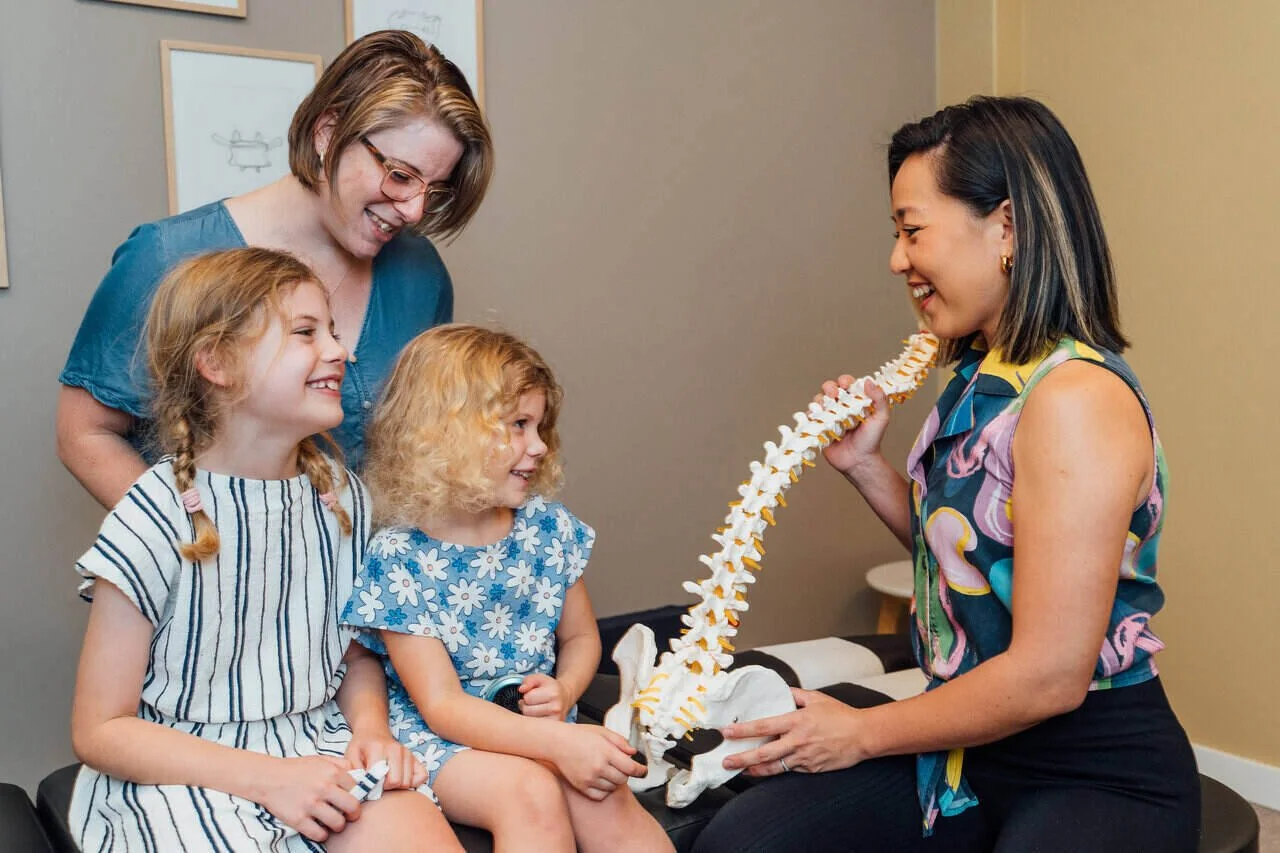
In certain situations, in addition to medical monitoring, care may focus on preserving mobility, treating muscular imbalance or promoting physical comfort. In order to provide proper and coordinated care for families in Brisbane who require a scoliosis check, chiropractors frequently collaborate with a larger referral network.
When to seek further assessment
Additional evaluation is advised if obvious asymmetry continues, gets worse or manifests during a growth spurt. Early assessment offers direction and clarity during a critical developmental stage, but it does not always result in treatment.
If scoliosis is accompanied by neurological symptoms (such as numbness, tingling or weakness), rapid postural changes or persistent discomfort, parents should also consult a doctor promptly, as these conditions require investigation right away.
Supporting children and teens through monitoring
Both parents and kids may feel uneasy about a scoliosis check. Age-appropriate explanation, unambiguous communication and reassurance are crucial. Numerous kids with scoliosis nonetheless engage actively in everyday activities, sports and education.
Instead of being a constant cause of worry, monitoring becomes a component of promoting healthy growth when care is collaborative and evidence-based.
Final thoughts
Since scoliosis in kids and teenagers is frequently mild in its early stages, awareness is important. Families can react calmly and proactively by knowing what to check for at home, knowing when screening is beneficial and adhering to the proper referral procedures.
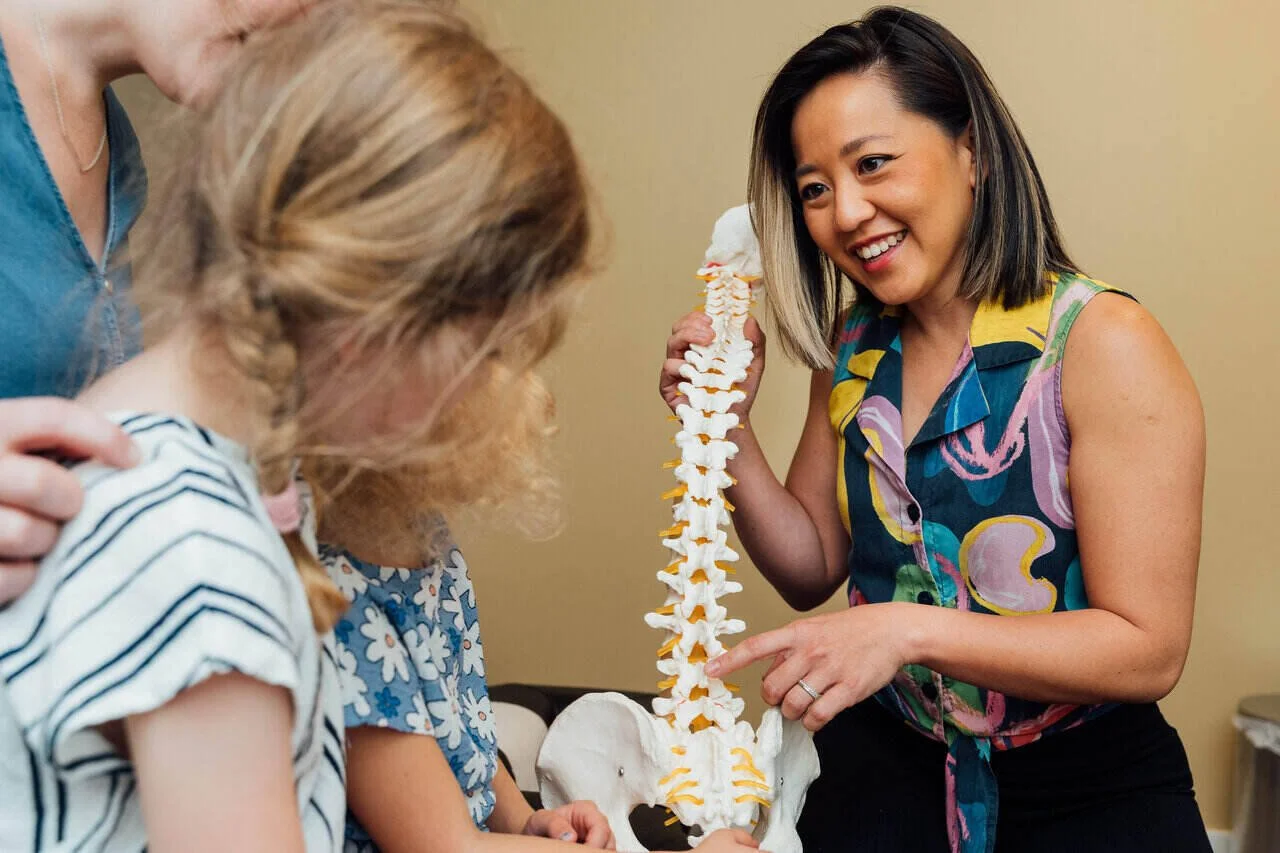
A chiropractor in North Brisbane, like us, can help evaluate posture and movement and support referrals to medical professionals when necessary if you're thinking about getting a scoliosis check in Brisbane or would like advice on what to do next.
Book an appointment to discuss whether a screening assessment may be appropriate.
See also: TMJ Specialist Brisbane