
A hip pain chiropractor’s guide to glute pain, buttock pain and nerve pain and how to find the right care path
Pain in the buttock, hip or upper leg is one of those complaints that can be surprisingly difficult to pin down. The area is anatomically complex, with multiple muscles, joints, nerves and bursae all capable of producing discomfort that feels similar on the surface but has quite different underlying causes.
Getting the distinction right matters. The management approach for a tight piriformis muscle looks different from care for a hip joint problem, which looks different again from sciatic nerve irritation. Focusing on the wrong structure may make it harder to manage the symptoms effectively.
Suffering from glute pain in Brisbane? Understand the causes and source of pain
The gluteal region contains three muscles, gluteus maximus, medius and minimus, along with the deeper piriformis and several other small external rotators. Any of these can become tight, overloaded or irritated, producing pain that is felt in the buttock itself.
Gluteal muscle pain typically feels like a dull ache or tightness in the buttock. It may worsen with prolonged sitting, getting up from a chair, walking hills or stairsor activities that load the hip. It tends to stay relatively localised to the buttock and does not usually travel down the leg in a clear pattern.
Piriformis syndrome produces buttock pain and can also cause tingling or aching that radiates into the back of the thigh. The piriformis sits close to the sciatic nerve and when it becomes tight or irritated, it can compress the nerve, producing symptoms that resemble sciatica. Key distinguishing features: the pain is typically centred in the mid-buttock, is often reproduced by specific hip movements and tends to worsen after prolonged sitting or activities involving repetitive hip rotation.
Greater trochanteric bursitis involves inflammation of the bursa on the outer aspect of the hip. Despite being called hip pain, it is most commonly felt on the outer side of the thigh and upper leg rather than deep in the joint or buttock. It tends to be sharp or burning on the outer hip, worsens with lying on that side and may be tender to touch directly over the bony prominence.
Pain in the hip joint
True hip joint pain originates from the ball-and-socket joint itself. It is less common than soft tissue pain in the surrounding area but important to identify correctly.
Hip joint pain is typically felt in the groin, sometimes radiating to the inner thigh or front of the knee. Pain that is primarily felt at the front of the hip or groin with weight-bearing, getting in and out of a car or bringing the knee toward the chest is more likely to involve the joint itself than the muscles around it.

In younger people, hip joint pain may be associated with femoroacetabular impingement (FAI) or labral pathology. In older adults, osteoarthritis of the hip is a common cause. Both typically produce a restricted range of hip movement alongside the pain.
Nerve pain in the buttock and leg
Nerve-related pain has a different quality from muscle or joint pain. It is often described as sharp, shooting, burning or electric and it tends to travel along a pathway rather than staying in one spot.
Sciatica refers to irritation of the sciatic nerve, most commonly from a disc bulge or joint degeneration in the lumbar spine. It produces pain, tingling or numbness that radiates from the lower back or buttock down the back or side of the leg, often as far as the foot. It typically follows a fairly consistent path and may worsen with forward bending, coughing or prolonged sitting.
Sacroiliac joint referral can produce buttock and leg pain without true nerve compression. The SI joint, where the spine meets the pelvis, refers pain into the buttock and sometimes the upper thigh in a pattern that can resemble nerve involvement but tends to be more diffuse and aching rather than sharp or shooting.
The distinction between piriformis syndrome and sciatica is particularly worth noting, as both can produce buttock pain with leg symptoms. Sciatica typically has a spinal origin and a more consistent leg distribution. Piriformis syndrome tends to be more localised to the buttock and reproduced by hip movement rather than spinal loading.
Practical clues worth paying attention to
Where exactly is the pain? Groin = more likely hip joint. Mid-buttock = more likely muscle or piriformis. Outer hip/thigh = possible bursitis.
Does it travel down the leg? If so, how far and in what pattern?
Does it feel sharp, shooting or electric? More likely nerve involvement.
What makes it worse? Sitting = piriformis or nerve. Hip movement = muscle or joint. Walking = could be any of the above.
Is there any tingling, numbness or weakness? These point more strongly toward nerve involvement.
When to get it assessed
Pain in this area that has persisted for more than a few weeks, keeps returningor is starting to affect how you walk, sit or sleep is worth getting properly assessed. Self-diagnosis in this region is genuinely difficult because the structures overlap and refer pain to similar areas.
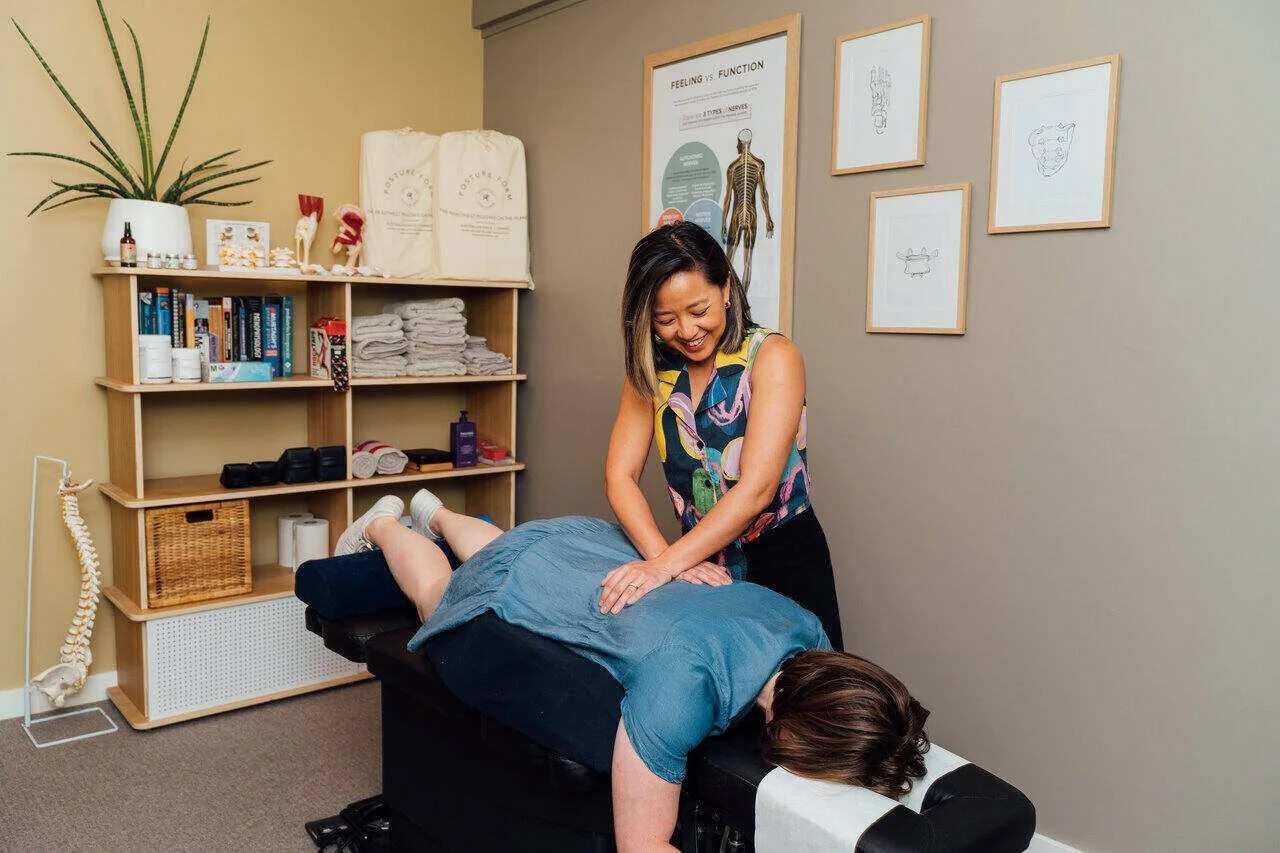
A chiropractor in North Brisbane (like us!) can assess the lumbar spine, sacroiliac joint, hip and surrounding soft tissues to help determine what may be contributing to your symptoms. At Tan Chiro, we look at the full movement picture rather than focusing only on the area of pain, because the source is often not exactly where the discomfort is felt.
See also: Sciatica Treatment Brisbane
When to seek urgent medical care
If buttock or leg pain is accompanied by significant weakness, loss of bladder or bowel control, numbness in the groin or inner thighor follows a significant fall or trauma, seek medical assessment promptly. These symptoms require investigation before musculoskeletal care.
Book an appointment to discuss your glute, hip or leg pain with a chiropractor at Tan Chiro.