
Why do you wake up with jaw tension and can a chiropractor really help?
Overnight clenching, stress, pillow position and neck tension may all contribute to a sore or tired jaw in the morning. You wake up, start your day and notice that your jaw feels tight, tired or tender. Perhaps your teeth feel sensitive, your temples ache or opening your mouth feels less comfortable than usual. Morning jaw tension can be easy to dismiss, especially if it settles as you begin moving. However, when it keeps returning, it is worth looking at what may be happening while you sleep.
There is rarely one universal explanation. Overnight clenching or grinding, emotional stress, sleep position and tension through the neck and shoulders can overlap. Understanding these possible contributors can help you notice patterns and choose the right next step.
What does morning jaw tension feel like?
Jaw tension in the morning does not always present as sharp pain. It may feel like pressure around the cheeks, fatigue when chewing or stiffness near the joints just in front of the ears. Some people also notice:
a dull headache around the temples
tooth sensitivity or flattened, chipped or worn tooth surfaces
clicking or grating when opening the mouth
difficulty opening the mouth fully
ear-area discomfort without an obvious ear problem
tightness in the neck area, shoulders or in the base of the skull
These symptoms can occur with bruxism, which means clenching or grinding the teeth, or with a temporomandibular disorder affecting the jaw joints and surrounding muscles. Similar symptoms can also have dental or medical causes, so recurring discomfort deserves proper assessment rather than self-diagnosis.
Why might your jaw feel tight after sleep?
1. Overnight clenching or grinding
Sleep bruxism can happen without you knowing. The jaw muscles may remain active during sleep, repeatedly clenching the teeth or moving them against each other. By morning, those muscles may feel as though they have been working for hours, because they have.

A partner may hear grinding, but silent clenching can be harder to identify. Morning headaches, sore jaw muscles, tooth wear or damage to fillings may provide clues. A dentist can examine your teeth and discuss whether a professionally fitted splint is appropriate. A splint may protect the teeth, although it does not necessarily address every factor contributing to clenching.
2. Stress that follows you into sleep
Stress and anxiety are commonly associated with teeth clenching and grinding. You may also brace your jaw during the day while concentrating, driving or responding to pressure, then carry that muscle tension into bedtime.
Try checking your resting jaw position several times during the day: lips can rest gently together while the teeth remain slightly apart. Your tongue should feel relaxed rather than pressed forcefully against the teeth. Short breathing breaks, regular movement and a consistent wind-down routine may also help reduce the general level of tension you take to bed.
3. Pillow and sleep position
Your pillow does not directly cause every case of jaw pain, but sleep position may influence how the head, neck and jaw are loaded overnight. A pillow that is too high or too low for your body and sleeping position can leave the neck bent or rotated for long periods. Sleeping with your hand, forearm or pillow pressing firmly into one side of the jaw may add local pressure.
Aim for a pillow that keeps your head and neck comfortably supported rather than pushed forwards or tilted sharply to one side. No single perfect pillow exists that will magically work for all of us. Shoulder width, mattress firmness and whether you sleep on your back or side all matter. If changing pillows, adjust one variable at a time and observe how you feel over several mornings.
4. Neck and shoulder tension
The jaw does not work in isolation. Muscles and joints through the jaw, head, neck and upper shoulders coordinate during everyday activities such as speaking, chewing and swallowing. Long periods at a laptop, frequent phone use or a habit of lifting the shoulders under stress may contribute to a broader pattern of head and neck tension.
If your jaw tightness arrives with a stiff neck or upper-back discomfort, it can be useful to assess the whole pattern rather than focusing only on the painful spot. It is important to understand that this does not mean that the neck is always the problem. It means both areas may deserve attention.
What can you try at home?
For mild symptoms, a few low-risk changes may make mornings more comfortable:
Let the jaw rest. Keep your teeth apart when you are not eating and avoid repeatedly testing a click or sore movement.
Temporarily reduce the workload. Choose softer foods during a flare-up and avoid chewing gum, very chewy foods and unusually wide bites.
Use comfortable warmth or cold. Apply a wrapped heat or cold pack for a short period, choosing whichever feels more soothing. Do not place extreme temperatures directly on the skin.
Review your evening habits. Reduce late caffeine and excessive alcohol, protect a regular sleep schedule and build in a calm transition before bed.
Check your workstation. Bring screens closer to eye level, let your shoulders relax and take regular movement breaks.
Track the pattern. Note stress levels, sleep position, headaches, tooth sensitivity and how long the stiffness lasts. This can make a professional consultation more useful.
Avoid forceful jaw stretching or exercises copied at random online. If movement is painful, restricted or accompanied by locking, an individual assessment is more appropriate.
Who should you see?
A dentist is an important first contact when you suspect overnight grinding, notice tooth wear or have tooth sensitivity, damaged fillings, gum concerns or pain that seems to come from a particular tooth. Your GP can help when symptoms may relate to medication, sleep problems, headaches or another medical condition.
Seek prompt care if you cannot eat or drink, your jaw becomes locked, you have facial swelling, significant trauma, severe or frequent headaches, visual changes, numbness or rapidly worsening pain. These features need medical or dental assessment rather than routine self-care.
How chiropractic care may fit into the picture
When morning jaw discomfort occurs alongside neck stiffness, headaches or shoulder tension,a chiropractor in North Brisbane (like us!) can assess movement and muscle tension through the neck, upper back and jaw region. At Tan Chiro, the aim is to understand the broader pattern, including your work posture, sleep set-up, aggravating habits and relevant health history.
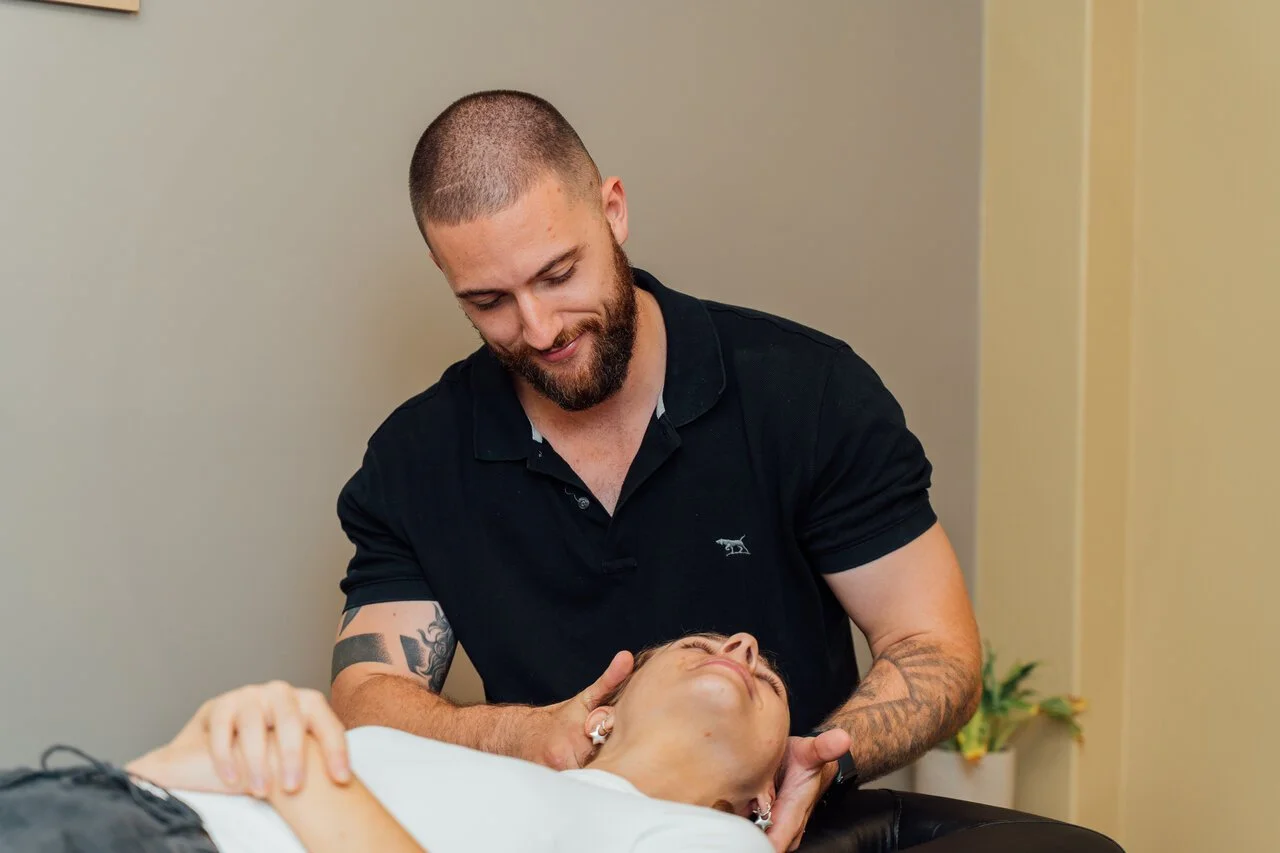
Care may include gentle, individualised manual approaches, movement advice and practical changes for posture or sleep positioning. Chiropractic care does not replace dental assessment and is not presented as a treatment for tooth damage or every cause of bruxism. Where the symptoms point to a dental or medical issue, coordinated care or referral is the sensible next step.
A better morning starts with noticing the pattern
Occasional jaw tightness may settle with rest and a few simple habit changes. If you wake with jaw tension morning after morning, however, do not assume you simply need to live with it. Consider what your teeth, stress levels, pillow position and neck are telling you, then seek the professional best placed to assess the likely source.
If you are looking for guidance on teeth clenching in Brisbane and also experience neck or upper-body tension, Tan Chiro can assess the musculoskeletal factors that may be contributing and explain whether chiropractic care is suitable for your situation. Book a consultation now!
See also:TMJ specialist Brisbane