
Suffering from clicking jaw in Brisbane or TMJ symptoms? Here’s how a jaw pain chiropractor might help
A clicking jaw is one of those things that is easy to dismiss until it starts happening often enough or loudly enough, to be impossible to ignore. For some people, it is a minor nuisance. For others, it is accompanied by pain, stiffness, headaches or difficulty opening the mouth fully and at that point, it becomes something worth understanding and addressing.
Jaw clicking is one of the most common presentations of temporomandibular joint dysfunction, more commonly known as TMJ or TMD. The temporomandibular joint connects the lower jaw to the skull just in front of the ear and is one of the most used joints in the body, involved in eating, speaking, yawning and swallowing.
What causes the clicking jaw and TMJ symptoms in Brisbane
Temporomandibular Joint (TMJ) disorders are highly common in Brisbane, affecting approximately 60% to 70% of the local adult population. The TMJ contains a small disc of cartilage that sits between the bones of the joint, acting as a cushion and allowing smooth movement. In a healthy joint, this disc moves in coordination with the jaw as it opens and closes. When the disc shifts out of its normal position, it can create a clicking or popping sensation as the jaw moves past it.
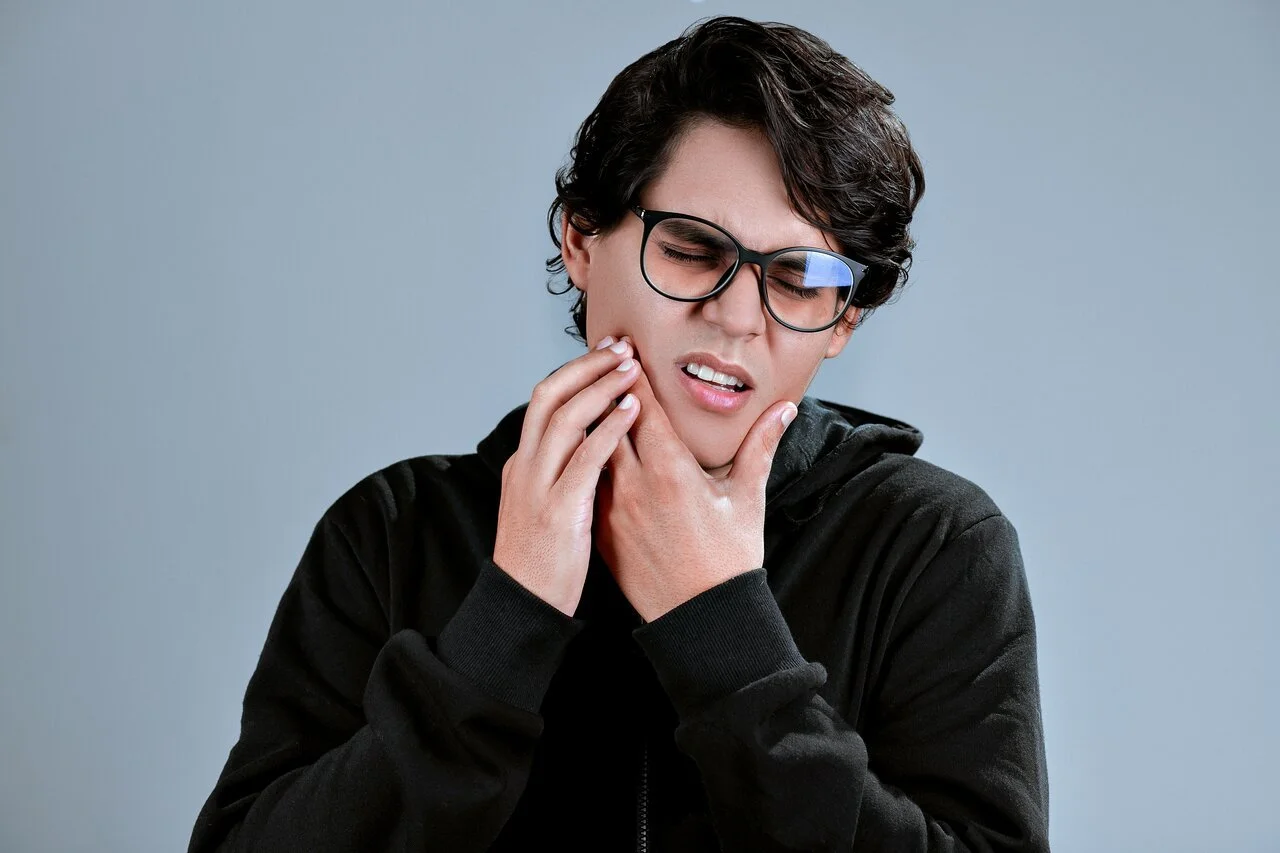
This is known as disc displacement with reduction. The disc slips forward when the jaw is at rest and clicks back into place as the mouth opens, which is why the click is often most noticeable at a certain point in the opening movement. A second click on closing is also common as the disc shifts again.
In most cases, this type of clicking is not painful and does not worsen significantly over time. However, in some people, the disc can displace in a way that limits opening, causes locking or becomes progressively more uncomfortable.
Other causes of jaw clicking and noise
Muscle tension and overuse can also contribute to joint noise. The muscles that control jaw movement, including the masseter and temporalis, can become tight and create uneven loading through the joint. Teeth grinding (bruxism) and clenching, particularly during sleep or periods of stress, are common contributors to both muscle tension and joint wear.
Joint degeneration in older adults can produce a grinding or grating sound rather than a distinct click. This reflects changes to the joint surfaces rather than disc displacement and may be associated with a more gradual onset of stiffness and reduced opening range.
Hypermobility of the jaw joint can also produce clicking in some people, particularly those with generalised joint hypermobility. The click reflects the joint moving through a greater range than typical, rather than a structural disc problem.
When jaw clicking is just noise
A painless click that has been present for years and is not changing is generally low risk. Many people have clicking TMJs that never develop into anything more significant.
It is worth seeking assessment when the clicking is accompanied by any of the following:
● Pain in or around the jaw, ear or temple during or after eating or yawning
● Difficulty opening the mouth fully or a feeling that the jaw catches or locks
● Headaches, particularly at the temples or base of the skull, that occur alongside jaw symptoms
● A change in how the teeth meet when biting
● Jaw stiffness on waking that takes time to ease
● A noticeable change in the clicking itself, such as new pain, increased frequency or a different sound
See also:TMJ specialist Brisbane
The connection between jaw, neck and head
The TMJ does not function in isolation. The jaw muscles attach to the skull and cervical spine and the way the jaw moves is closely linked to head position, neck posture and the tension patterns of the muscles connecting them.
Many people with TMJ symptoms also have neck stiffness, upper cervical restriction or significant tension through the muscles of the jaw, face and neck. Addressing this broader pattern, rather than focusing on the jaw alone, is often an important part of effective management.
Stress is another significant factor. Jaw clenching, teeth grinding and bracing through the face and jaw are common physical responses to stress that many people do not notice until the symptoms have been building for some time.
How a jaw pain chiropractor in Brisbane may help
A chiropractor in North Brisbane (like us!) can assess the jaw joint, the muscles of the face, jaw and neck and the cervical spine to identify whether musculoskeletal factors are contributing to your TMJ symptoms.
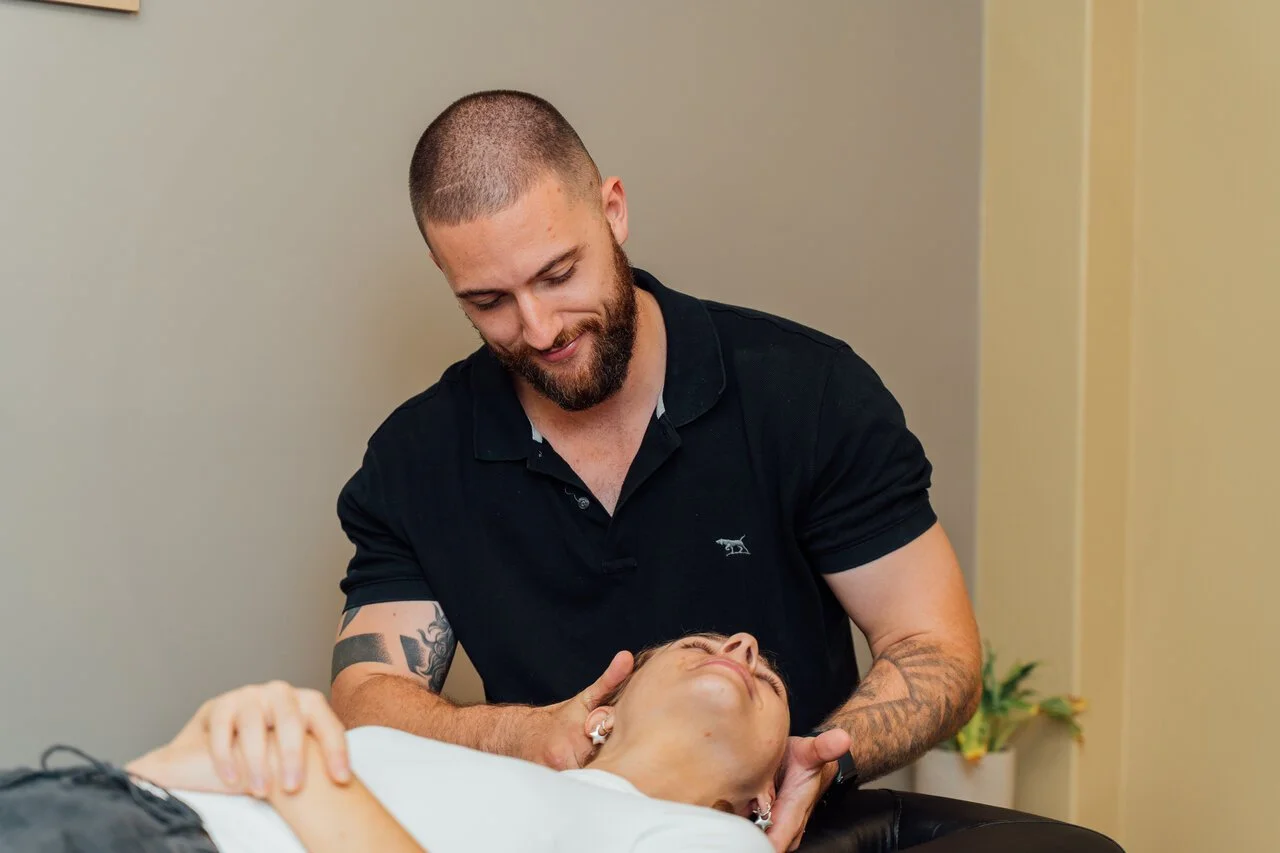
At Tan Chiro, TMJ care may involve gentle joint mobilisation of the jaw or upper cervical spine, soft tissue work on the masseter and surrounding muscles, postural guidance and advice on load management, including dietary modifications during acute flare-ups. For complex presentations, co-management with a dentist, oral physician or physiotherapist experienced in TMJ may also be appropriate.
When to seek further assessment
If jaw symptoms are accompanied by significant swelling, skin changes, difficulty swallowing, sudden severe pain or any unexplained lumps around the jaw or neck, seek medical assessment. These symptoms may require investigation beyond musculoskeletal care.
Jaw clicking alone is rarely urgent, but pain, restricted opening, locking or symptoms that are progressively worsening are worth getting assessed sooner rather than later. Early management tends to produce better outcomes than waiting until the dysfunction is well established.
Book now to discuss your jaw symptoms with a chiropractor at Tan Chiro.