
Hip carrying baby: Causes of posture pain and how chiropractic care may help
If you have a young baby or toddler, chances are you hold them with your stronger arm, rest them on your stronger hip and get on with whatever else needs doing.
It feels right and for good reason. This habit can subtly change how your body holds itself and that change can begin to show up as aches, tension and postural changes that feel increasingly difficult to get rid of.
What happens to your body when you always carry on one side
The body is remarkably good at adapting. When you consistently carry weight on one side, your muscles and joints adjust to manage that load. Your hip may jut out to create a shelf for the child to rest on, your spine begins to curve to one side to compensate, your opposite shoulder may rise or drop and your neck may tilt to keep your balance.
None of this happens dramatically or overnight. It is gradual and that is part of what makes it easy to miss. The problem is that these compensations, repeated day after day across months and years, can contribute to uneven muscle development, joint loading and postural imbalance.

Common areas where this shows up include the lower back, the hip that does most of the carrying, the opposite shoulder and the neck. You may notice one side feels tighter than the other or that certain movements feel different depending on the direction.
Why parents are particularly vulnerable
The early years of parenting involve an enormous amount of physical load. Carrying, feeding, bending, lifting and soothing are constant and they often happen in the same positions repeatedly. Babies also get heavier as they grow, which means the load on your body increases steadily.
Sleep deprivation, breastfeeding posture, time at a desk during nap times and the general demands of caring for a young child can all compound the strain. Uneven posture pain in new parents is common, but it is often brushed aside.
Recognising the signs of postural imbalance
Postural imbalance from one-sided carrying does not always announce itself with sharp pain. More often, it shows up as:
A dull ache on one side of the lower back that never fully clears
Tightness or discomfort in one hip that the other does not share
One shoulder sits higher than the other in the mirror
Neck stiffness that tends to favour one side
A general sense that your body feels uneven or off-balance
If any of these feel familiar, it does not mean something is seriously wrong; however, it may be worth paying attention to.
Simple habits that may help
The most straightforward change is to alternate the side you carry on. This is easier said than done, particularly if you have a strong dominant preference, but even a small shift toward more balance can reduce the cumulative load on any one side.
Baby carriers and slings that distribute weight more evenly across both shoulders can also help. If you regularly carry your child in your arms for extended periods, a carrier may be worth considering.
Being more mindful of how you stand while carrying can also make a difference. Shifting your weight so you are not consistently jutting one hip outward, engaging your core slightly and varying your position during long carry periods all help reduce the strain.
Stretching the hip flexors, strengthening the core and doing some gentle work on the muscles of the opposite side may help offset the imbalance. A simple daily routine does not need to be long to be useful.
When it may be worth getting assessed
If the discomfort has been going on for some time, keeps returning or is starting to affect how you move and feel daily, it may be worth having it looked at. Persistent uneven posture pain that does not respond to rest, stretching or habit changes may benefit from a professional assessment.
A chiropractor in North Brisbane (like us!) can assess how your spine, hips and surrounding muscles are moving and functioning together. At Tan Chiro, we look at the full picture, including the daily habits and physical demands that may be contributing to the imbalance, rather than just focusing on the area that hurts.
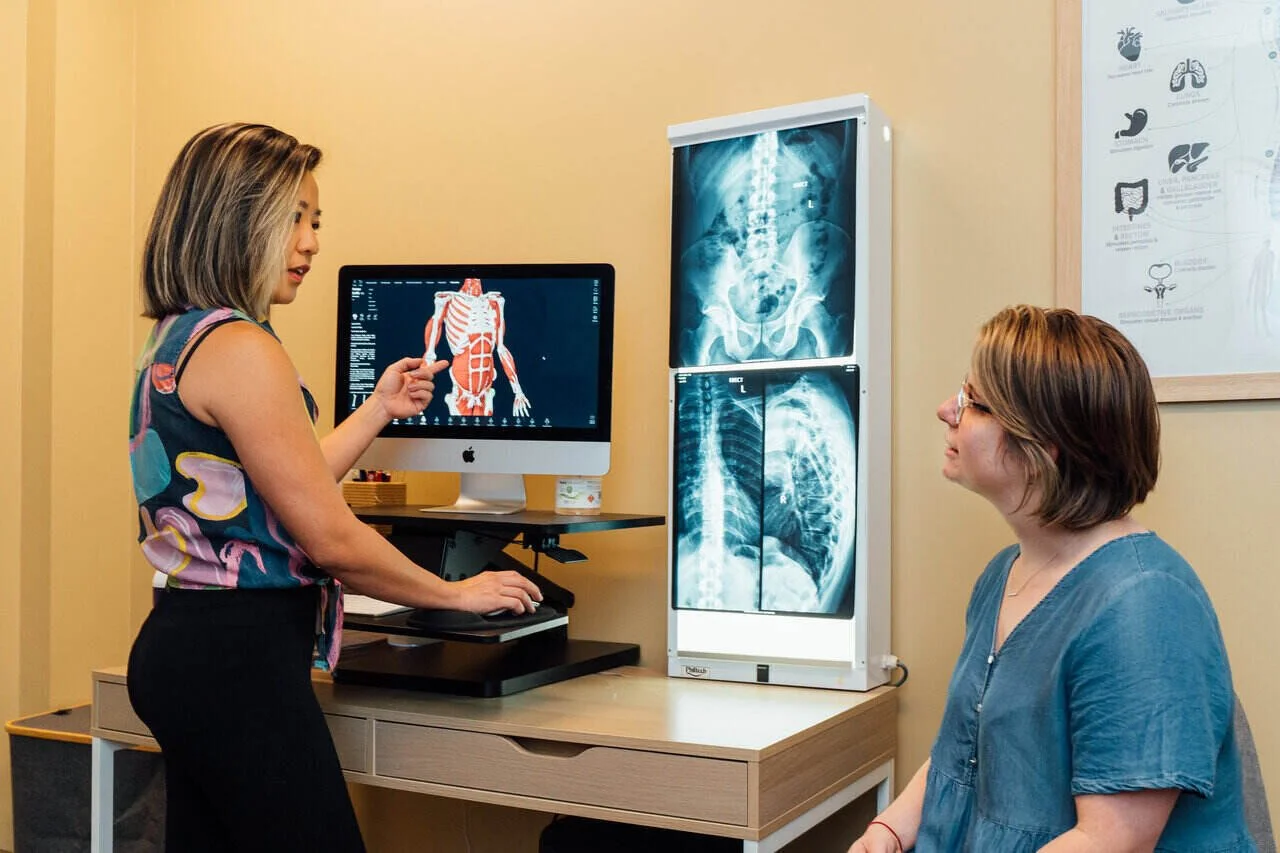
Care may involve working on joint mobility, muscle tension and movement patterns, alongside practical guidance on carrying habits, posture and daily load management. The goal is to help your body function more comfortably, not just while you are being treated, but in the daily reality of life with young children.
When to seek medical attention
If you experience sharp or severe pain, significant weakness, numbness or tingling in the arms or legs or pain following a fall or accident, please seek medical advice. These symptoms may need further investigation beyond musculoskeletal care.
Hip carrying is one of those habits that feels completely harmless until the body starts signalling otherwise. A small postural shift here, a bit of tightness there. By the time parents notice, the pattern has usually been building for months.
Alternating sides, using supportive carriers and staying aware of how you are loading your body can all help. If the discomfort persists, a personalised assessment may help you understand what is happening and what support might be useful.
Book now to discuss whether a chiropractic assessment may be helpful for you.
See also: Sciatica Treatment Brisbane