
Thoracic spine pain and rib tightness: What’s really going on?
Mid-back pain tends to get less attention than neck or lower back pain, but for people experiencing it, the impact on daily life can be just as significant. A dull ache between the shoulder blades, a feeling of pressure around the ribs or a thoracic spine that feels stiff and difficult to rotate are all common complaints. Understanding what is driving them is a useful first step toward doing something about it.
How the thoracic spine works
The thoracic spine runs from the base of the neck to just above the lower back and each of its twelve vertebrae attaches to a pair of ribs. This makes the thoracic region considerably more stable and less mobile than the neck or lower back. That stability is important for protecting the heart and lungs, but it also means that when the thoracic spine becomes restricted, the effects can spread across a wide area. This includes the ribs, upper back and occasionally the chest.
Common causes of mid-back and rib pain
Prolonged sitting and desk work are among the most frequent contributors. Hours spent with a rounded upper back hold the thoracic spine in sustained flexion, gradually leading to joint stiffness, muscle fatigue and a loss of the extension needed to sit comfortably upright.

Poor screen posture compounds this further. A head that sits forward, rounded shoulders and a collapsed chest all increase the load through the thoracic region and the muscles that support it.
Lifting and physical work can also place significant strain on the mid-back, particularly when done repeatedly, with poor technique or when the body is fatigued.
Rib joint irritation is a commonly overlooked source of mid-back discomfort. Each rib connects to the thoracic vertebrae at small joints that can become restricted or irritated, producing a sharp, catching or pressure-like sensation that may wrap around toward the front of the chest. This may sometimes be mistaken for muscular pain. And in some cases, cardiac symptoms, which should always be ruled out first.
What it typically feels like
A persistent dull ache between the shoulder blades, worse after prolonged sitting
Tightness or pressure that wraps around from the spine toward the side of the chest
A sharp or catching sensation with twisting, bending or taking a deep breath
Stiffness that makes rotating the torso uncomfortable
If mid-back or chest discomfort is accompanied by shortness of breath, significant chest pain or pain radiating into the jaw or left arm, seek urgent medical attention before considering a musculoskeletal cause.
The role of posture and daily habits
The thoracic spine adapts over time to the positions it is consistently placed in. Sustained flexion from desk work gradually reduces mobility in extension and rotation. Because thoracic mobility also supports movement in the neck and lower back, when it stiffens, those regions are often asked to compensate, which can contribute to pain in those areas as well.
Simple changes can help. Breaking up prolonged sitting with short movement breaks, raising screen height to reduce the tendency to look downward and gentle thoracic extension over a foam roller or rolled towel can all help restore some of the mobility that sustained sitting tends to reduce.
How a chiropractor may help
A chiropractor who understands rib pain in Brisbane can assess how the thoracic spine and rib joints are moving and identify areas of restriction that may be contributing to your symptoms. At Tan Chiro, care may involve joint mobilisation, soft tissue work on the upper back and intercostal muscles, postural guidance and home exercises to support lasting improvement.
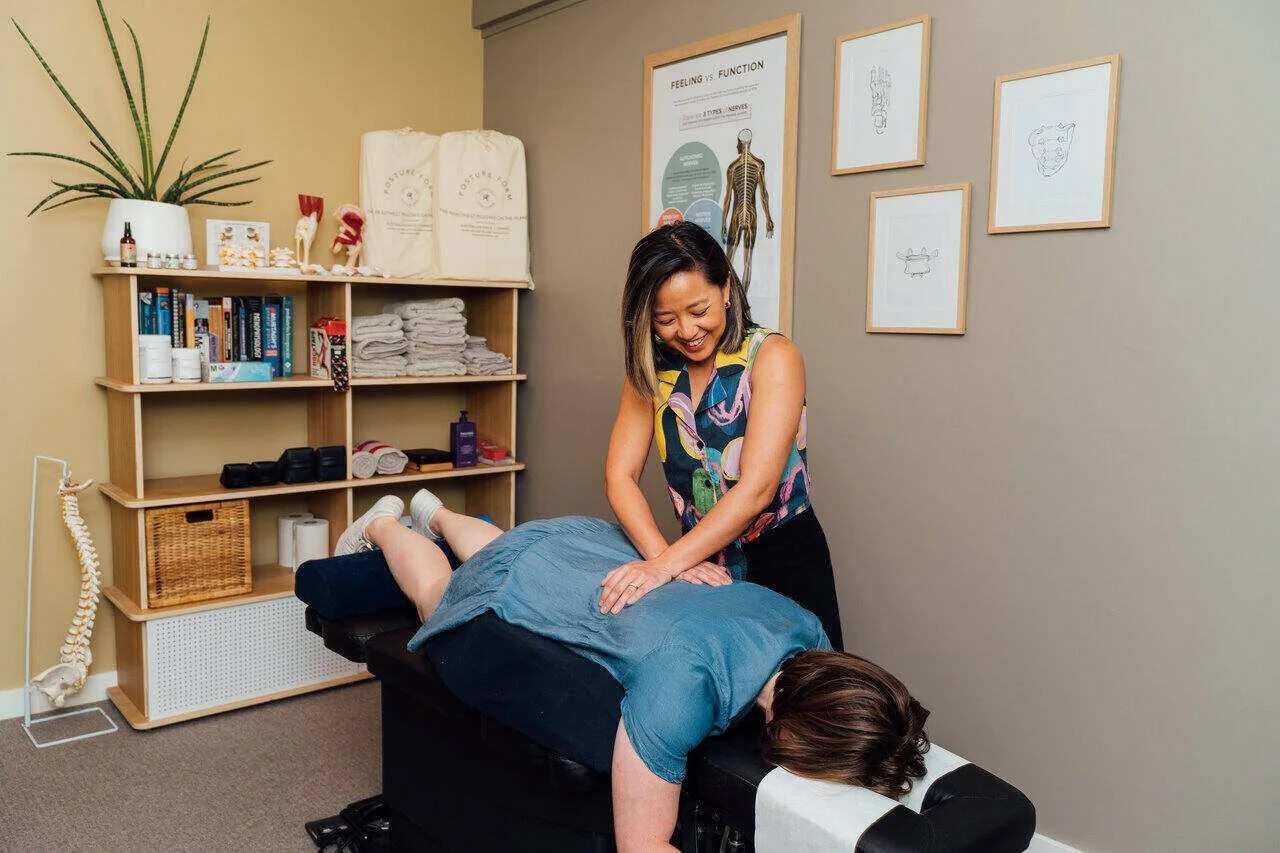
A chiropractor in North Brisbane (like us!) can also help identify whether your workstation setup, movement patterns or daily habits are playing a role in the problem and offer practical guidance on what changes may be most useful.
See also: Sciatica Treatment Brisbane
When to seek medical attention
If your mid-back pain is accompanied by difficulty breathing, fever, unexplained weight loss or rapidly worsening symptoms, please seek medical assessment promptly. These symptoms may point to causes that require investigation beyond musculoskeletal care.
Mid-back and rib tightness are common but frequently overlooked. For many people, the cause is gradual postural strain rather than a single injury, which means it often responds well to care once the underlying pattern is addressed.
Book now to discuss whether a chiropractic assessment is the right next step for you.