
Sitting lower back pain: What actually helps during long workdays?
A full workday can involve hours at a desk, followed by more sitting in the car or on public transport. By the evening, your lower back may feel stiff, tired or increasingly uncomfortable. For some people, the pain eases once they move around. For others, it returns every time they sit down again.
This does not necessarily mean that sitting has damaged your spine. However, remaining in one position for too long can contribute to stiffness, muscular fatigue and discomfort. People experiencing sitting lower back pain often focus on finding the perfect chair or posture, but lasting improvement usually involves more than changing how upright they sit.
The more useful approach is to understand what aggravates your symptoms, introduce regular movement and adjust your working environment so your body is not repeatedly placed under the same demand.
Why sitting lower back pain can build throughout the day
Sitting itself is not automatically harmful, but remaining in the same position for too long can contribute to stiffness and discomfort. Your lower back may become increasingly uncomfortable if you lean towards a laptop, twist towards a second screen or sit without enough support, while stress and concentration can also cause you to brace your body or stay almost completely still.

Common signs of sitting lower back pain include stiffness when standing, a dull ache across the lower back, tightness through the hips or buttocks and discomfort that worsens later in the day but eases with movement. These patterns do not confirm the cause, so an assessment may be helpful if symptoms persist or begin affecting work, sleep, driving or exercise.
See also: TMJ specialist Brisbane
Why back pain is not always caused by “bad posture”
People are often told to sit perfectly straight, pull their shoulders back and keep their spine in one ideal position. In reality, there is no single posture that everyone must maintain throughout the day. Even a position that looks ergonomically correct can become uncomfortable when held for too long. The body generally responds better to variation than rigid posture. Sitting upright for some tasks, relaxing back into the chair for others and regularly standing or walking can be more practical than trying to remain perfectly still.
The goal is not to fear every slouched position or keep the abdominal muscles constantly braced. Instead, focus on finding a comfortable, supported position and changing it before discomfort begins to build. Your workstation should also allow you to work without repeatedly reaching, twisting or leaning forwards. The screen should be positioned in front of you, frequently used items should be within easy reach and your feet should be supported by the floor or a footrest.
Movement breaks that actually help with lower back pain
You do not necessarily need a complicated stretching routine every hour. Short, frequent changes in position may be more achievable and effective during a busy workday.
Simple movements may include:
Standing and gently extending the hips
Taking a short walk
Slowly moving the hips from side to side
Alternating between sitting and standing
Performing a few comfortable squats
Changing the chair or position used for part of the day
How to reduce back discomfort during long drives
Driving limits movement, so long commutes can cause discomfort to build quickly. Adjust the seat so you can reach the pedals comfortably, keep your elbows slightly bent and feel supported by the backrest.
A small cushion or rolled towel may help support the lower back. On longer trips, take safe breaks to walk and move and try a short walk before work or after arriving home to reduce another long stretch of sitting.
Do standing desks really help with lower back pain?
A standing desk can be useful, but standing all day is not automatically better than sitting all day. Remaining in any one position for too long may contribute to fatigue and discomfort.
A sit-stand desk works best when it encourages variation. You might sit for focused work, stand during shorter tasks and walk during phone calls. Build standing time gradually rather than changing from an entire day of sitting to an entire day on your feet.
Comfortable footwear and an appropriately positioned screen are also important. If standing increases your symptoms, return to a comfortable position rather than forcing yourself to continue. The aim is to create more movement choices, not replace one rigid posture with another. Alternating between sitting, standing and walking is generally more sustainable than prolonged standing alone.
When back pain needs professional assessment
Most temporary back stiffness is not a sign of a serious problem and gentle movement can often be helpful. However, you should seek appropriate medical advice when pain is severe, follows an accident or does not improve over time.
Prompt assessment is also important if the pain:
Travels down one or both legs
Is accompanied by numbness, tingling or weakness
Causes changes in bladder or bowel control
Is associated with numbness around the groin or saddle area
Occurs with fever, unexplained weight loss or illness
Regularly wakes you at night
Prevents you from walking or completing normal activities
These symptoms should not be managed solely through workstation adjustments or stretching. Back pain that lasts for several weeks or continues to worsen should also be discussed with an appropriate healthcare professional.
How a chiropractor may assess sitting lower back pain
A chiropractor in North Brisbane (like us!) can assess how your spine, hips and surrounding joints move and explore whether your work setup, driving habits or daily movement patterns may be contributing to your symptoms. An assessment for sitting lower back pain may include discussing when the discomfort begins, how long you sit, what positions feel better or worse and whether symptoms change during walking, bending or exercise. Your chiropractor may also assess joint movement, muscle tension, posture and basic movement patterns.
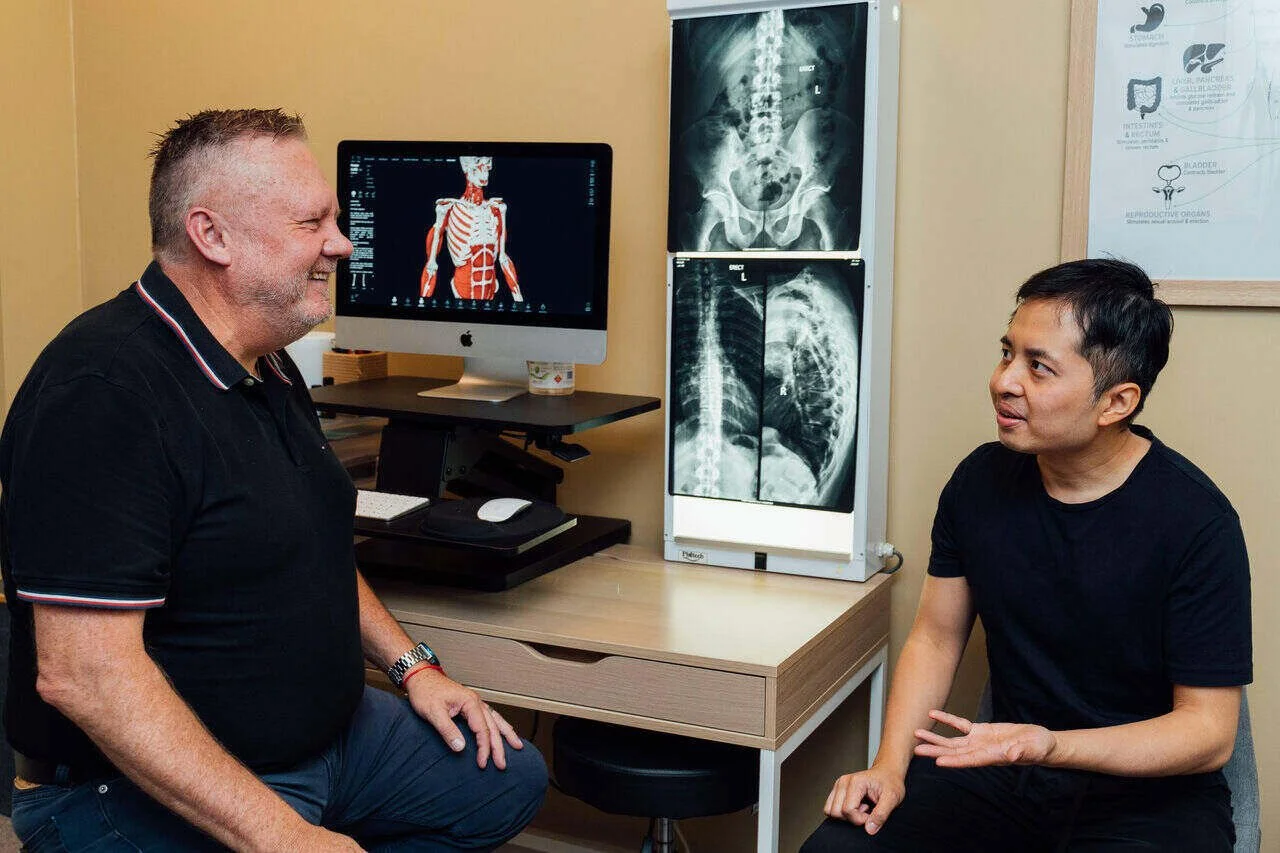
Depending on the findings, care may include age and condition-appropriate manual techniques, mobility advice, exercises and practical suggestions for managing your workday.
Small changes that can make the workday more comfortable
Managing persistent discomfort is rarely about finding one perfect chair, stretch or posture. It usually involves reducing uninterrupted sitting, introducing more variety and gradually bringing comfortable movement back into the day.
Start with realistic changes. Move between meetings, adjust your screen, vary your position and take breaks during long drives. Pay attention to what helps rather than forcing yourself to maintain a position simply because it looks correct.
If sitting lower back pain continues to interrupt your workday or commute, the team at Tan Chiro can assess your movement and discuss an approach suited to your symptoms and routine. Book now to find out whether chiropractic care may be appropriate for your lower-back discomfort.